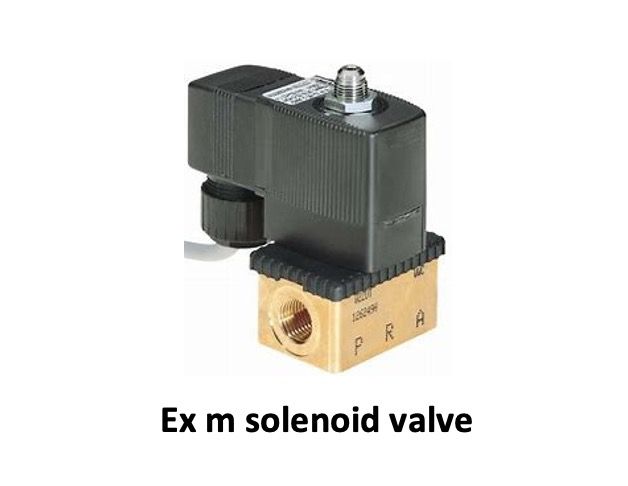
Type of protection “m” encapsulation
EMMUA 214 States: Page 23
3.7.1 Definition
Type of Protection ‘m’ is obtained by encapsulating or encasing the hot or sparking components with a material that does not support combustion, which prevents the ingress of any explosive gas and also cools the parts such that the surface temperature is safe for the intended use.
3.7.2 Standards and selection
i) Current standards
IEC 60079-18:2009 (EN 60079-18) Explosive Atmospheres Part 18: Equipment protected by encapsulation.
ii) Superseded standards
EN 50028 Encapsulation
BS 5501 Part 8 Encapsulation ‘m’.
EPL/category and zones of use
Equipment marked Ex ‘m’ (i.e. without a level of protection) may be used in areas requiring EPL ‘Gb’ and I Gc I , or Category 2 and 3. Prior to 2007, such equipment was permitted to be used in Zones 1 or 2.
Encapsulated equipment to level of protection ‘ma’ may be used in areas requiring EPL ‘Ga l , ‘Gb’ and Cc’, or Category 1, 2 and 3. Equipment to level of protection ‘mb’ may be used in areas requiring EPL ‘(3b’ and I Gc’, or Category 2 and 3 . Equipment to level of protection ‘mc’ may only be used in areas requiring EPL ‘Gc’, or Category 3.
Main requirement for Ex m protection is encapsulation in a compound to a depth of 3mm from free space above the compound.
For small items of apparatus this has become a popular method of protection with the development of modern epoxy resins.
In very small apparatus the depth of compound between free space and components can be reduced to 1mm.
There are limitations on the use of components within an encapsulated apparatus.
Consideration of fault conditions is very important.
Consideration must be given to the operating condition of each component within its specified range. For example, a range of resistors and capacitors must operate below 2/3rds of their rated voltage and power.
Fuses used must be of an enclosed type, such as glass envelope or ceramic cartridge.
Batteries must not release electrolyte or gas, or operate at higher temperatures than specified by the manufacturer.
Consideration needs to be given to expansion of components which are embedded in a rigid material.
Surface temperature of the encapsulated module must not exceed the T-class rating for the hazardous area.
Any Ex m equipment that is found to be faulty cannot be repaired and should be replaced.